CASE FILE 001music / sample lineage14 minute exploration
Sometimes the voice gets to you before the name does.
Inside “Champagne Shit”: the voice that opens the room
Barrington Levy’s “Murderer” leads me through a Jamaican musical family and into Janelle Monáe’s The Age of Pleasure. Along the way, recognition becomes a question about memory, authorship and who gets to feel at home in a celebration.
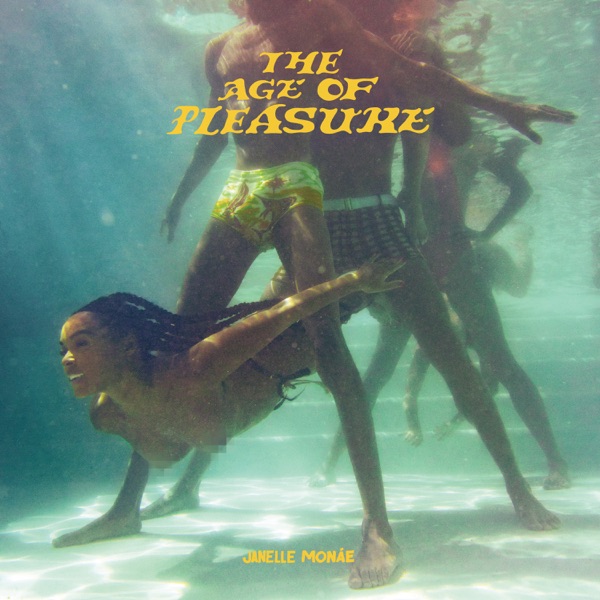
The Age of Pleasure · 2023 Artwork credit in the receipts below.
The thread I’m following
A few seconds inside “Champagne Shit” open a much larger room. The connection is Barrington Levy’s “Murderer.” I’m following that voice backward through its musical family and forward into Monáe’s celebration, because knowing the source changes what I notice around it.
The records are here with the reading. My sources and image credits are collected at the end.
02
1968 → 2023 / follow the thread
The family around that voice
I’ve kept two threads visible on this board: the Hot Milk riddim that different performers made their own, and the specific “Murderer” connection to Monáe. Following both gives the voice a history without treating every older record as a sample in the new one.
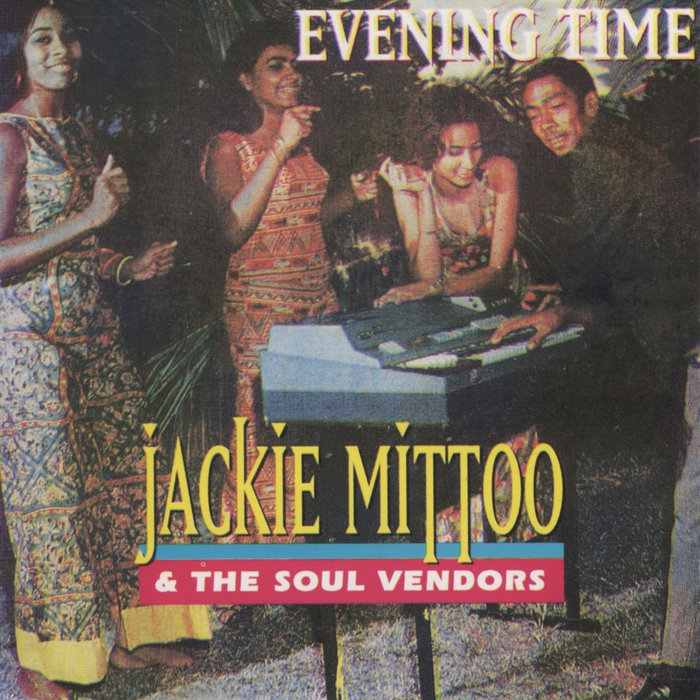
1968On Evening Time
Hot Milk
Jackie Mittoo & The Soul Vendors
Mittoo’s instrumental gives this part of the family its foundation. Later performers find different ways to live inside it.
Source and artwork credit in the receipts below.Hot Milk riddim foundation
1976
Tunnel OneTommy McCook & The Sound Dimension
Single / diagram, not sleeve art
Tunnel One
Tommy McCook & The Sound Dimension
McCook’s instrumental gives us another entry in the Hot Milk family. Its connection is the riddim.
Source and artwork credit in the receipts below.Shared riddim / another version
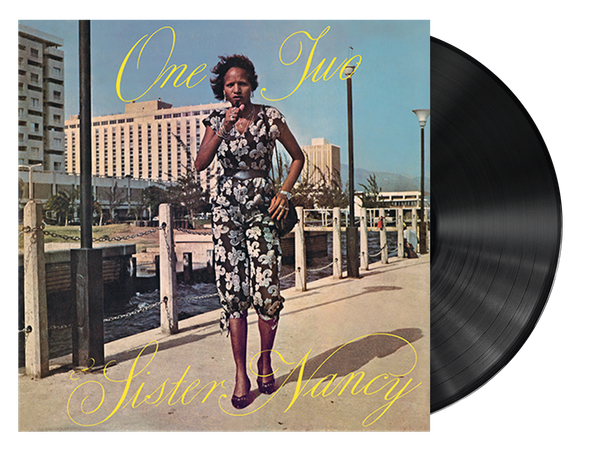
1982On One, Two
I Am a Geddion
Sister Nancy
Nancy’s voice reaches this family before Levy’s. The sleeve shown here is the later reissue; 1982 is the original album date.
Source and artwork credit in the receipts below.Shared riddim / a different voice
1984
MurdererBarrington Levy
Single / diagram, not sleeve art
Murderer
Barrington Levy
This is where the broader rhythmic family meets the specific vocal connection I am following into Monáe.
Source and artwork credit in the receipts below.Vocal source → reported sample
2023On The Age of Pleasure
Champagne Shit
Janelle Monáe
The voice also appears on “Black Sugar Beach.” The connection continues as the album crosses into its next track.
Source and artwork credit in the receipts below.Sample destination / adjacent-track continuity
03
Close reading
What the connection opens up for me
The voice at the center
Barrington Levy is the name I want you to leave with.
The opening vocal from “Murderer” is the connection documented in both “Champagne Shit” and the following “Black Sugar Beach.” DancehallMag identifies it, and the release credits name Levy. That gives this recognition somewhere solid to land: a singer, a record, and a set of receipts we can follow.
There is one wrinkle I want to keep in view. The reporting calls the relationship a sample; the physical-release credit transcription calls it an interpolation. Those terms describe different ways earlier music can enter a new recording. I can name the connection without pretending the paperwork and the reporting say exactly the same thing.
What first interests me is smaller than all of that: a vocal shape familiar enough to make somebody pause. A drawn-out sound or a turn in the voice can begin the search before there is a title, a lyric, or even a reliable way to spell what we remember.
The people making the record
The name on the cover is not the whole room.
Once Levy has a name, I want to make the production team visible too. The digital credits list Janelle Monáe and Nate “Rocket” Wonder as producers, with Nana Kwabena and Sensei Bueno in additional production and arrangement roles. The physical-credit transcription gives a more detailed picture of Wonder’s production, Kwabena and Bueno’s additional production, and the instrumental and arrangement work shared around the record.
The roles shift on “Black Sugar Beach.” There, the physical transcription names Kwabena as producer, Wonder and Bueno as producers for Goodhouse Dojo, and Roman GianArthur as co-producer. The same source relationship moves across the adjacent tracks inside a collective piece of work.
I cannot use those credits to point at one person and say: that is who chose the Levy passage. Selection, editing, recreation and placement are specific decisions. The credits make the collaborators visible; they leave that particular hand unnamed. I would rather keep the space open than give somebody a tidy story the evidence has not supplied.
Behind the familiar voice
The riddim carries a family of its own.
The vocal brings me to Levy. The riddim takes me further back. Dub-Stuy’s history of Hot Milk connects Jackie Mittoo, Tommy McCook, Sister Nancy and Levy through a musical framework that different performers inhabit in different ways.
That is a different kind of relationship from lifting or recreating a particular vocal passage. A shared riddim lets several records belong to a family without making them interchangeable. The earlier records give “Murderer” a neighborhood. They do not all become direct sources for Monáe’s track.
I have chosen a route through that family rather than trying to fill every branch. The point is to make the distance around the familiar sound visible: other performers, other records, and other ways of making a shared foundation feel like your own.
The craft inside the recognition
The space around the voice changes its job.
A recognizable phrase brings several things with it: the rise and fall of its melody, the rhythm of its syllables, and the grain of the voice. Any one of those can reach memory before the title does. That is why I am interested in the gesture even when the words are difficult to pin down.
But identifying the gesture only gets me partway. Its surroundings decide whether it announces itself, answers another voice, or flashes through the arrangement like punctuation. The same familiar sound can feel expansive in one setting and almost conspiratorial in another.
This is where the connection becomes useful to me as a way of thinking about production. Material carries a history, but placement gives it a present-tense job. The comparison players let those two questions sit together: what do we recognize, and what is the new record asking that recognition to do?
A useful near miss
“Here I Come” found the singer first.
I have kept “Here I Come” in this study because the initial recognition found Levy before it found “Murderer.” That is an interesting kind of near miss. A voice can be so distinctive that the record most available to memory answers first, even when another recording is the connection we are looking for.
The receipts lead to “Murderer” for Monáe’s sequence. “Here I Come” stays beside it for the comparison: Levy’s movement between melody, cry and rhythmic syllable helps explain why the association was close. It lets us understand the recognition without turning the remembered record into the documented source.
That remembered record has a long reach of its own. Pitchfork describes “Here I Come” as an anthem whose first bars can call for a selector rewind; Jamaican reporting follows its later use by Shyne and the Black Eyed Peas. A voice that has traveled that far can arrive carrying more than one musical memory.
Another voice in the memory
Junior Reid belongs here under his own name.
The Game’s “It’s Okay (One Blood)” brings in Junior Reid and Reid’s own “One Blood.” That distinction matters to me because a familiar kind of vocal call can pull several records close together in memory. The closeness is worth exploring. The singers still deserve their own names.
Reid was raised in Waterhouse and Firehouse, and Pitchfork places Reid and Levy within a wave of Waterhouse-style singers. That history helps explain a stylistic neighborhood around these extended calls. It does not make the two voices identical or put “One Blood” inside the “Murderer” lineage.
I keep this connection at the edge of the study as a reminder of what recognition can do: lead somewhere fruitful, then ask us to listen more carefully to the differences.
Across the track boundary
The voice keeps the door open.
The appearance of “Murderer” in both “Champagne Shit” and the adjacent “Black Sugar Beach” makes me think beyond the single. A recurring voice can hold a space open while the track name changes. The index says we have moved on; the sound can tell us we are still in the same room.
That is my reading of the continuity. A short track can do a great deal of connective work, and its length tells us very little about its importance to the experience around it. Taken together, these two destinations make the Levy connection part of the album’s movement.
I find a useful parallel in cinema: sound can carry our attention through a cut before the next image settles. Here, the comparison helps me describe the feeling of a boundary that lets something pass through. It is an analogy for the experience, rather than a claim about the musicians borrowing a particular film technique.
Monáe’s account of making the album
The party was part of the work.
In the conversation with The Current’s Ayisha Jaffer, Monáe describes putting new songs into parties without announcing them as her own. Friends trying to identify the music became a response worth noticing. She also describes writing during the week with an approaching party in mind.
That account changes the room for me. It is not only the setting represented by the record; it is one of the places the work meets a response. A body starts moving, someone reaches for a phone, a song stays in the atmosphere. Those are different kinds of information from a formal critique.
A party is not an infallible test, and this testimony does not tell me who picked a particular source. It does give the album’s pleasure a practical setting. The music is being shaped in contact with the people who might live inside it for a night.
The people inside the celebration
Who gets to feel at ease?
Monáe’s interview connects the album’s visual world with Black and brown people, queer and trans people, and the safety needed to experience joy. That makes ease feel built, rather than incidental. A celebration has conditions: who is welcome, who can relax, and who can be visible without bracing for what comes next.
This is where the album opens a larger question for me. A body at leisure can carry social meaning because leisure and belonging are not equally available. The room can offer pleasure while also making a claim about whose pleasure deserves space.
The Levy connection adds a particular musical history to that room. Naming him, the record and the riddim keeps that history specific. I do not want a Jamaican voice to dissolve into a vague idea of collective Black sound. The names make more of the people in the music available to us.
Where I leave the door open
You can love the sound before you know the history.
A passage can work because of its energy, texture or shape. Nobody has to complete this family tree before enjoying “Champagne Shit.” I would hate for a close reading to make pleasure feel like a test you can fail.
The history adds possibilities. Someone who already knows Levy may bring one set of associations; someone meeting the voice here may leave with a new record to explore. Both encounters belong in the room. The evidence helps me be precise about the connection, while your memory can change what that connection means.
That is what I wanted to bring back from this study: a familiar sound with its people still attached, a clearer sense of how the album moves, and a little more room to notice what somebody else hears in it. The discovery does not have to close the conversation.
04
Documented uses
The voice keeps finding new rooms
I followed “Murderer” into these other records as well. The connection is documented in each case, although the material they reuse is not always the same passage.
1992
Documented recording sample
Murderer
Dica & Big Vern
WhoSampled identifies multiple elements of Levy’s recording, with its comparison pointing to the opening seconds. A route into early UK rave.
2001
Cataloged recording sample
Ol’ Time Killin’
Kardinal Offishall feat. Jully Black, Allistair & I.R.S.
Listed by WhoSampled among uses of Murderer. This identifies the source record; it does not establish the same vocal edit heard on Champagne Shit.
2011
Cataloged vocal / lyric sample
Murderer
PNC
WhoSampled lists Levy’s Murderer alongside Fat Freddy’s Drop’s Ernie as sources. Two distinct records feed this track.
2011
Reported recording sample
Warning
Uncle Murda
LargeUp identifies another use of Murderer, preceding its discussion of Sterling Simms. The source does not provide a stem-level account of the edit.
2012
Reported sample + vocal influence
Tell Her Again
Sterling Simms feat. Meek Mill
LargeUp identifies the sample and Levy-inspired vocal gestures. Direct Music Service points its comparison to the start of both recordings.
2023
Reported opening-vocal sample
Black Sugar Beach
Janelle Monáe
Levy’s vocal also appears on the next track of The Age of Pleasure. Listen across the track boundary as well as within the songs.
05
Another creative connection
Fela enters by a different door
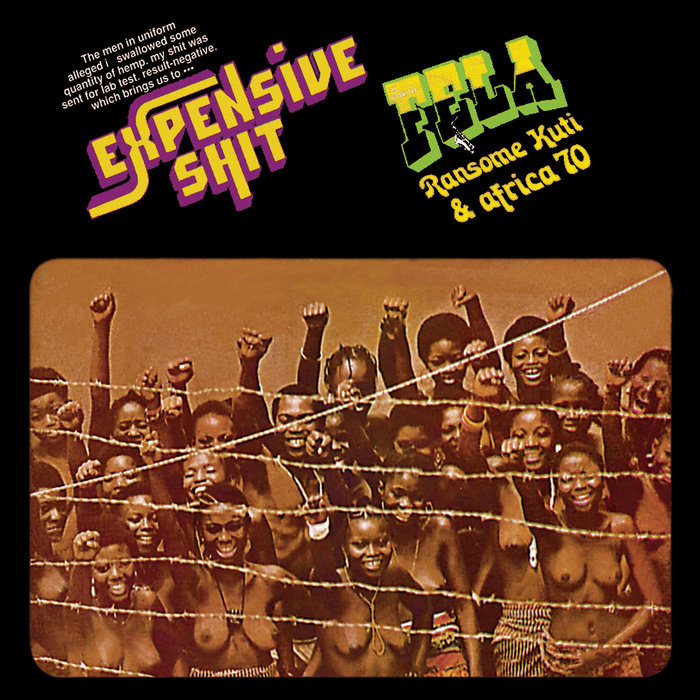
Monáe has named Fela Kuti’s “Expensive Shit” as an inspiration. I keep it here as part of the album’s creative conversation, with its own route into the story.
Expensive Shit · 1975
Creative influence
Monáe cites Fela Kuti’s “Expensive Shit” as inspiration.
RelationshipCreative influence on the album’s language. Separate from the sample and riddim histories.
I’m leaving this with you
What record did that voice bring back for you?
I’ve shared the connections that changed this record for me. Your memory may bring a different one into the room.
Pri$$y Vandross
06
Sources and listening
My sources and listening references.
My reading brings together the referenced recordings, published production credits, contemporary reporting, the Hot Milk history and Monáe’s account of making the album. Reporting and the physical-credit transcription use different terms for the “Murderer” connection, and I keep that difference visible. The historical claims have receipts below; the interpretations are mine. I have not used session files or isolated stems to reconstruct the production. The players retain the selected recordings and their existing passage settings.
Open the listening receiptsOpen the research receipts
Identifies the Levy vocal on Champagne Shit and Black Sugar Beach and links listening references. Secondary reporting, not a clearance document. Its Nancy date differs from the original album date supplied by VP Records; this timeline follows the latter.
Corroborates Levy’s writing credit. A writer credit alone does not distinguish a master sample from an interpolation; it is read alongside the explicit sample report.
MusicBrainz · community transcription of the physical release
Labels the “Murderer” relationship on both tracks as an interpolation and itemizes production, arrangement, programming, performance, recording, mixing, and mastering roles. MusicBrainz is community-maintained, so this is identified as a transcription rather than treated as a label statement. A retail transcription of the same physical credits was used as a cross-check.
Credits Monáe and Nate Wonder as producers, with Nana Kwabena and Sensei Bueno in additional production and arrangement roles, plus the track’s performance and engineering personnel. The role list is broader than the physical-release transcription, so both are shown instead of silently choosing one.
Broken Record · interview transcript · December 12, 2023
Monáe describes Wonder’s heavy work across the album’s music, production, and writing and names the wider creative community. The conversation supports collective authorship but does not identify who selected or executed the “Murderer” relationship.
Provides the selected Hot Milk version lineage, including Tunnel One and Murderer. It distinguishes a 1967 composition reference from the 1968 release entry. This is a curated historical survey, not proof that every version samples its predecessor.
Identifies Hot Milk on Evening Time and describes the original 1968 album. The current catalog page is a reissue listing. Cover image: Studio One, via this catalog.
Catalog entry identifies the 1976 Coxsone single and Hot Milk rhythm. The board uses a labeled disc diagram because an archival sleeve image is not supplied here.
Dates the original album to 1982. Artwork shown is the later VP retail reissue image, not a claim to have photographed an original 1982 pressing. Track spelling varies across catalogs.
The 2023 original album is the subject here, not the later Champagne Shit remix. Source of the album artwork. Copyright remains with the relevant rights holders.
The Current · interview with Ayisha Jaffer · July 2023
Published interview transcript supports the party-testing account and Monáe’s discussion of community, safety, and joy. The surrounding philosophical reading is Pri$$y Signal’s interpretation.
Further conversation
The Age of Pleasure, A.I., & Freedom
Apple Music · Janelle Monáe with Zane Lowe
A longer creator interview for readers who want to keep exploring. It is offered as further viewing, not as support for an unheard or unverified quotation in this feature.
Reid discusses the song’s response to political and territorial violence. The introduction identifies its use by The Game. Its 1989 date is the one used here; other reporting gives 1988.
Pitchfork · Edwin “STATS” Houghton · February 2017
Connects Levy and Reid with Waterhouse-style singing and describes Here I Come as one of the few anthems still capable of earning an immediate selector rewind. This supports vocal-style and cultural-memory comparisons, not a sample connection between the records.
Primary release reference
It’s Okay (One Blood) feat. Junior Reid
The Game · official music video
Confirms Junior Reid as the featured artist and offers the comparison track. The TIDAL interview supplies the source-song context.
Supplies the 4:18 album-master duration and the two lyric-synchronized cue positions used by the listening deck: Junior Reid’s first One Blood entry at 0:20.709 and the first full refrain at 1:10.541. It is timing evidence, not a claim that this record uses Murderer.
Release metadata and a synchronized lyric reference for Here I Come. Its offsets belong to that version and are not used to establish the selected player’s phrase boundaries.
Primary recording reference
Barrington Levy: Here I Come
Jet Star Music · official lyric video
An additional official recording reference for Levy’s vocal signature. The comparison player uses the selected version listed separately in these receipts.
Identifies the opening ‘shoodilley’ flight as Levy’s trademark and explains the record’s continuing circulation. It supports the vocal-memory reading, not a sample-source claim.
Documents later uses by the Black Eyed Peas and Shyne. Read with Pitchfork’s description of the song’s enduring crowd recognition, it supports calling Here I Come a widely circulating memory without making it part of the Monáe source chain.
Retrieved indexed entry identifies the direct sample and its opening comparison. Its related-record list also identifies Ol’ Time Killin’. Full-page retrieval was unavailable; these are catalog attributions, not independent audio verification.
Retrieved indexed entry lists Murderer and Ernie. The card distinguishes the source-record claim from a claim about the exact sampled phrase. Full-page retrieval was unavailable.
Useful routing evidence for hearing the recognizable opening gesture in a side-by-side comparison. This entry concerns Dreadknot Used, not Monáe, and is not treated as licensing evidence or as proof of the Monáe production method.
The catalog places the relevant Barrington Levy source moment at the whole-second marker 0:04. IPXS uses this only as corroboration; the exact loaded YouTube asset was independently analyzed and certified at 3.00 seconds.
Here I Come: the recording used in this edition
The selected recording for the comparison player. Its passage settings are retained; they are not presented as independently certified phrase boundaries.